PAINTING BASICS
Priming
Miniatures should always be primed before you apply paint for best results. Priming helps paint stick to the model, and give a smooth finish. You can use a spray on primer, or the brush on primer supplied in each box.
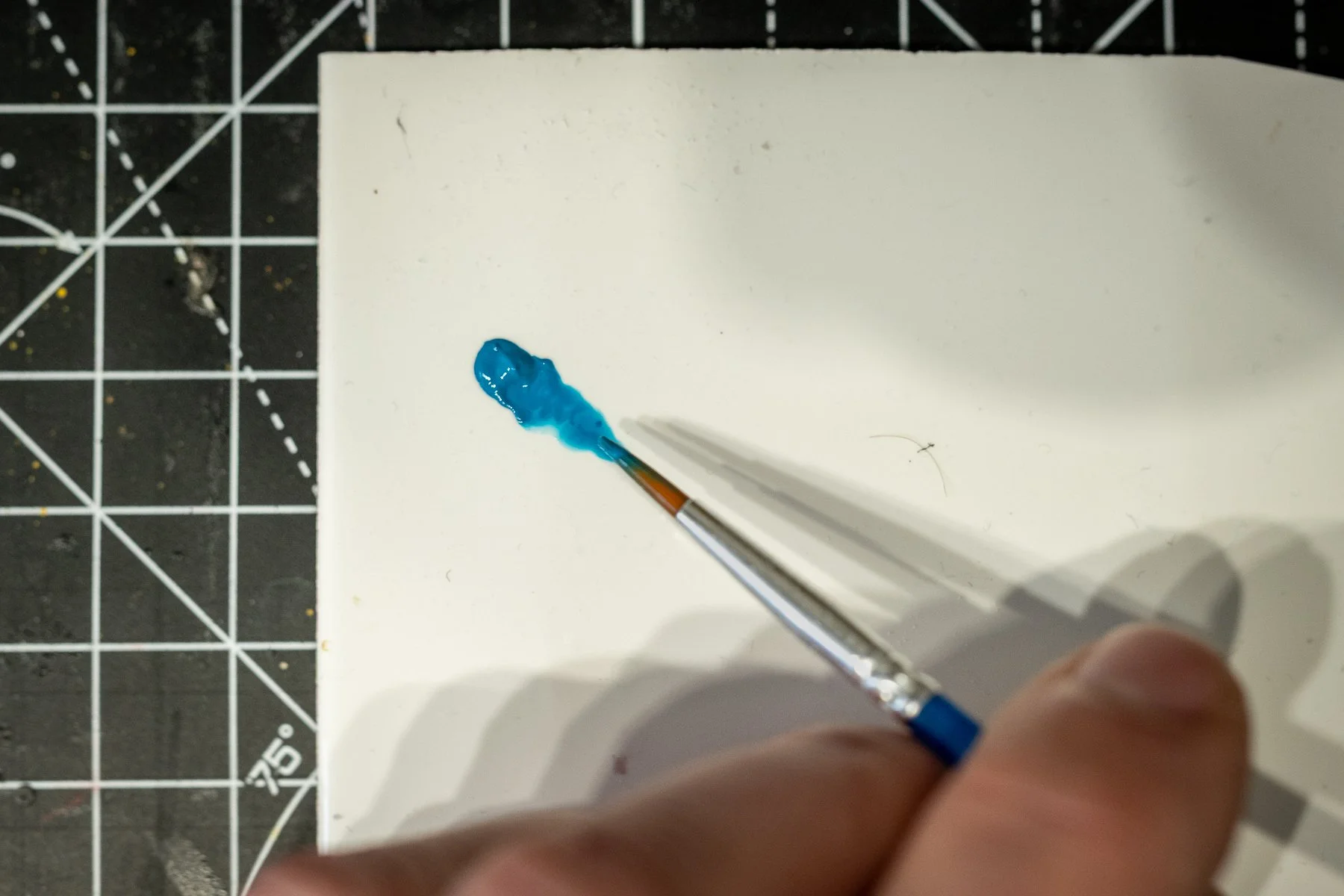
Thin your paints
Paints straight out of the pot can be very thick and gloopy. If you apply them to the model like this, you will get an uneven finish and cover up the fine details of the sculpt.
Instead, add a small amount of paint from the pot to a palette, and then mix in a small amount of clean water. You will see the paint becomes much smoother. You will always get better results with a couple of thin coats of paint, than one thick coat. Just remember to let each coat dry fully before adding the next one on top.
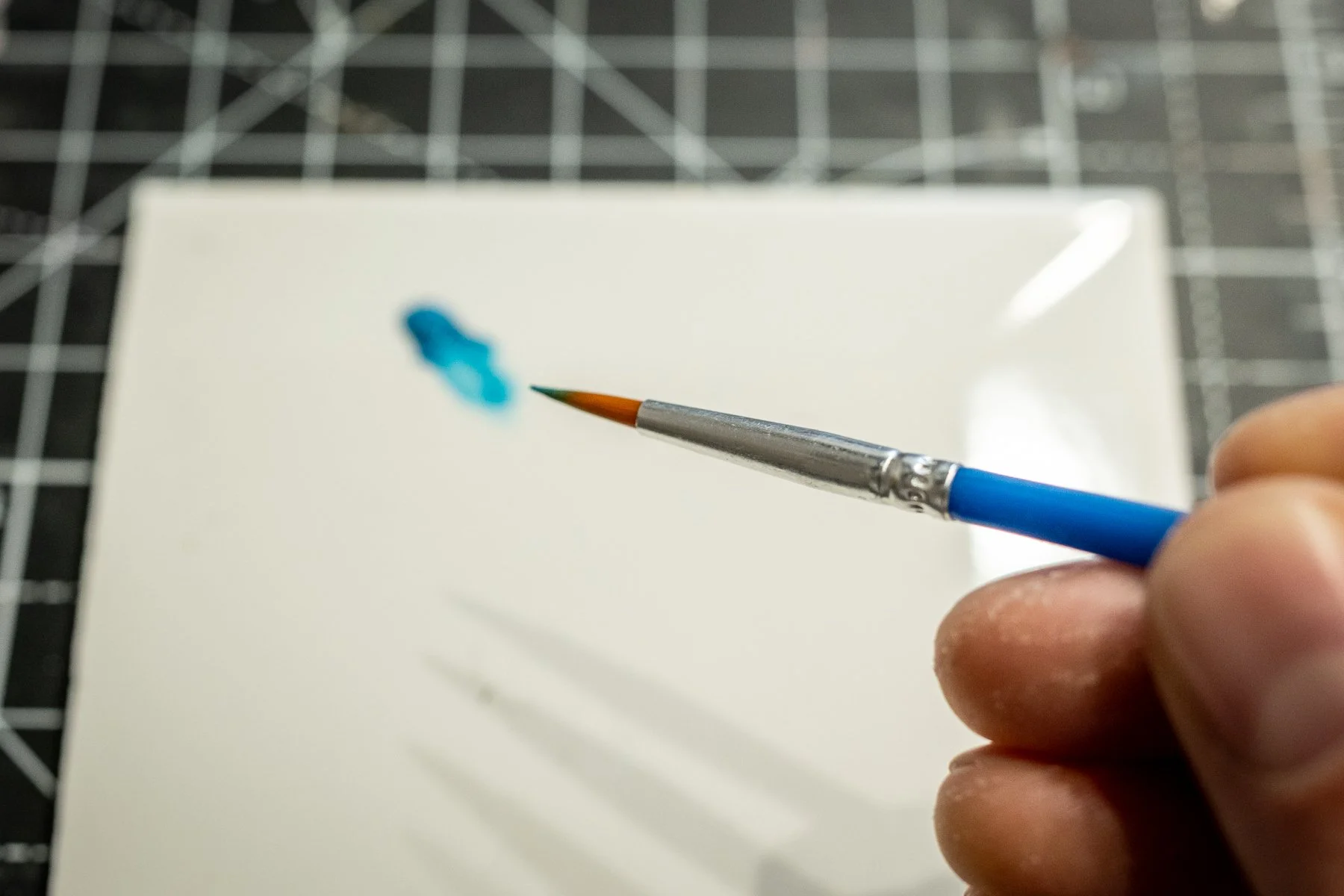
Load you brush
Roll just the tip of your brush in the thinned paint on your palette. This helps to keep a nice point on your brush and stops too much paint from being added. You want to avoid getting paint near the metal part of the brush as it can dry inside and cause your brush to lose its shape.
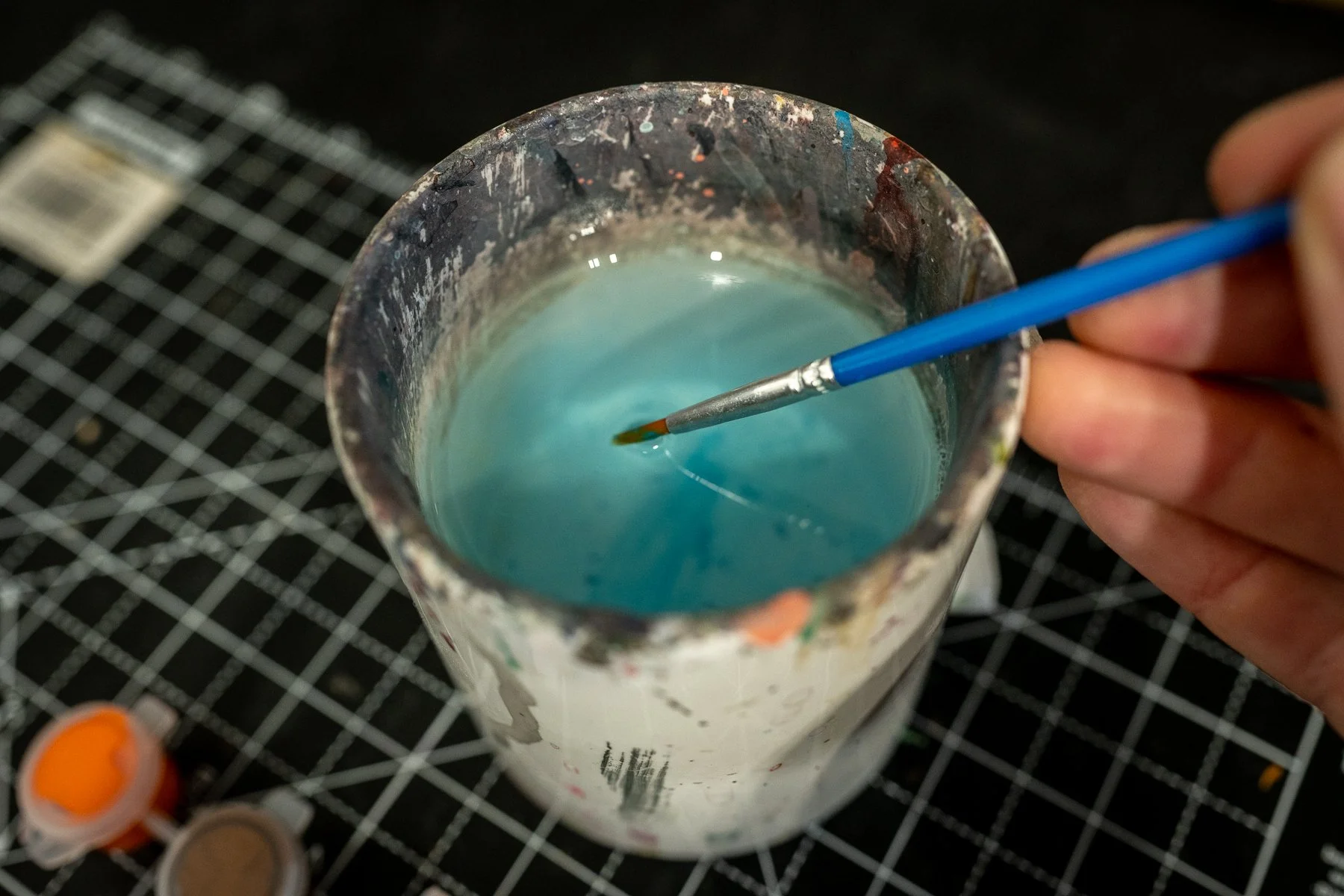
Give your brushes a good clean
It’s a good idea to rinse your brushes regularly in clean water to prevent paint from drying in the bristles. It’s also a good idea to change your water after using a metallic paint, to stop the flakes from getting into your other paints.
Once you have finished your painting session, show your brushes some extra love with a good rinse. You can add a little soap or shampoo for a deep clean.